



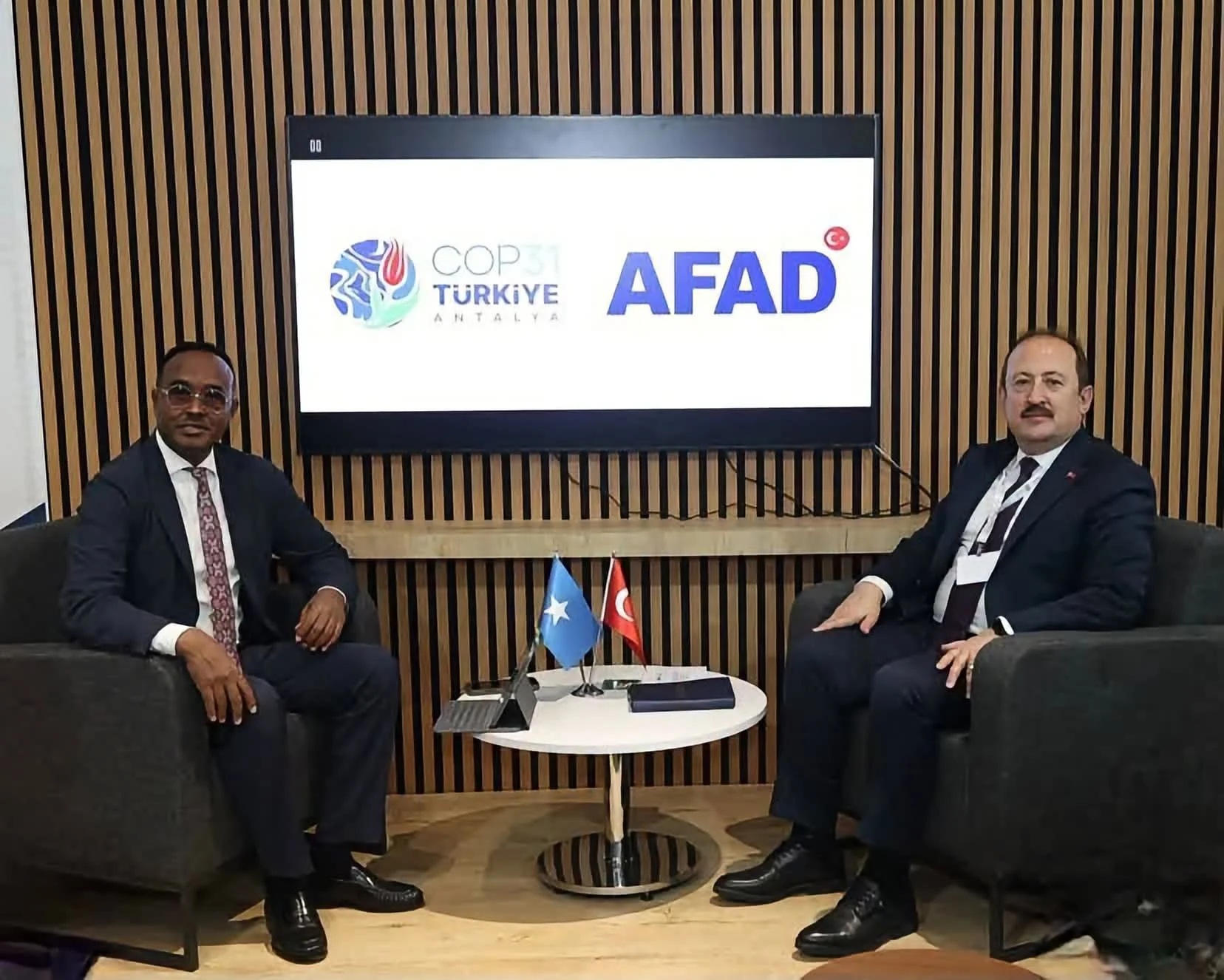
Somalia and Türkiye have agreed to establish a joint technical team to advance cooperation on disaster preparedness, early warning systems and specialist training, following talks between senior officials in Antalya.

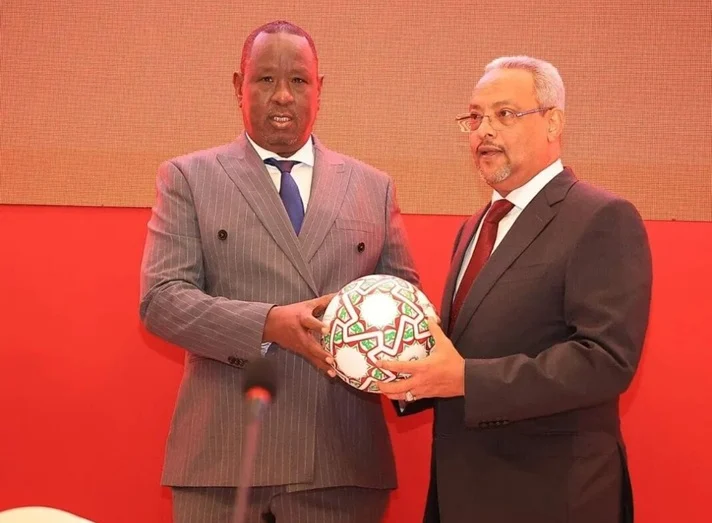
Somalia’s Disaster Management Agency (SoDMA) Chairman, Mohamud Moalim Abdulle, met his Turkish counterpart, Ali Hamza Pehlivan, at AFAD headquarters during the COP31 conference. Their discussions centred on strengthening Somalia’s ability to anticipate emergencies, prepare for natural disasters and coordinate effective responses.
The officials explored opportunities to exchange technical expertise, improve early warning systems and build SoDMA’s institutional capacity. The proposed cooperation would bring together technical support and staff training to strengthen the agency’s disaster management capabilities.
Both sides agreed that a joint technical team would develop a formal cooperation framework, coordinate training programmes and facilitate knowledge-sharing. The agreement establishes a next step for advancing the partnership, with the detailed framework still to be developed.
Moalim described the proposed partnership as an important step towards improving Somalia’s capacity to prepare for and respond to natural disasters. He also thanked Türkiye’s government and people for their continued support, particularly during the drought of 2011.
Türkiye’s engagement in Somalia expanded during that emergency, when it provided food and medical assistance and helped establish field hospitals in Mogadishu. That response marked an expansion of Turkish support that subsequently extended into several development sectors.
According to Türkiye’s development agency and foreign ministry, Turkish assistance has since supported projects in health, education, agriculture, infrastructure and institutional capacity-building.
Cooperation has also included practical training for disaster response personnel. In 2024, a Turkish-supported programme provided essential first-aid training to approximately 200 SoDMA staff members.
The planned technical team would build on that existing cooperation by providing a mechanism for organising further training, sharing expertise and developing the proposed disaster management framework.


