
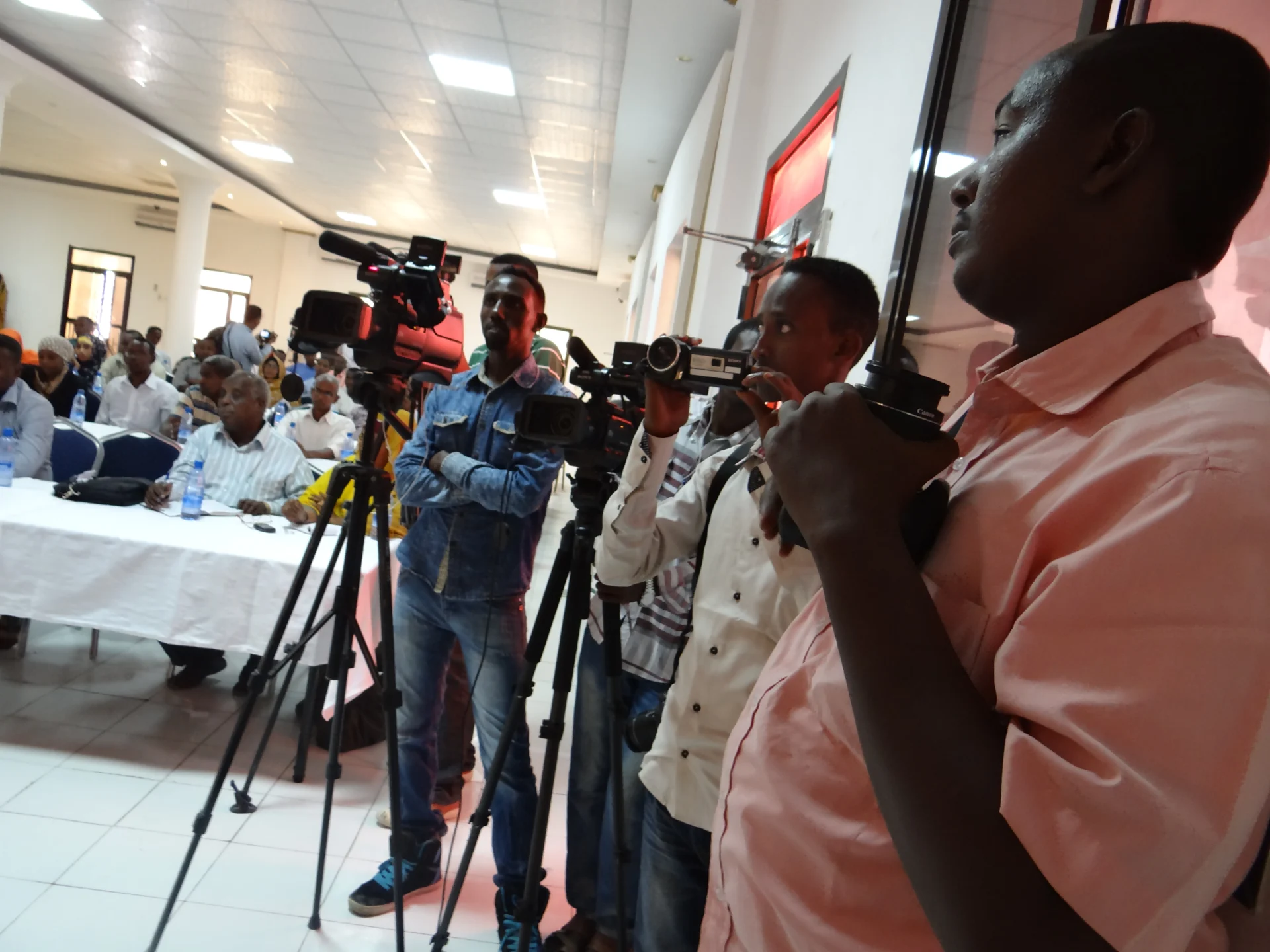

Journalists in Somalia are increasingly confronting pressure from political and security authorities. In recent weeks, the Parliament imposed sanctions banning reporters who covered disorder within the legislative chamber, while the National Intelligence and Security Agency (NISA) carried out a raid on a local Mogadishu radio station.
These developments raise serious concerns about the shrinking space for independent journalism in the country. Media practitioners reporting on governance and political issues face mounting risks, and observers caution that ongoing restrictions on press freedom could erode transparency and accountability, ultimately limiting the public’s access to trustworthy information.
On Wednesday, journalists covering a chaotic session of the Federal Parliament were barred from returning to the legislature. The session, disrupted by intense disputes over proposed constitutional amendments, was recorded on video and widely shared on social media. In response, the Speaker of Parliament prohibited the reporters from entering the premises. Some media outlets were instructed to assign new reporters, though compliance remains unclear.
Separately, on Saturday, 31 January, Risaala Media’s Mogadishu headquarters was illegally occupied and blockaded by an armed individual claiming affiliation with the National Intelligence and Security Agency (NISA), accompanied by plainclothes officers. Journalists and staff faced verbal threats and intimidation, with several detained outside and mobile phones confiscated, effectively halting news operations for several hours, according to Risaala Radio.
Somali journalists continue to operate under extremely challenging conditions, including low pay and frequent harassment from authorities. These ongoing pressures erode morale and resilience, posing a serious threat to media freedom and the public’s access to independent information in Somalia.